
Most chiropractors treat where it hurts. Gonstead finds where it starts
Why the same pain keeps coming back
At some point you probably stopped telling people about it. Not because it got better. Because you got tired of explaining something nobody seemed to be able to fix.
You’d tried the things you were supposed to try. Physio. Massage. Exercises. Maybe another chiropractor. Some of it helped — for a while. Then the pain came back, and somewhere along the way you started wondering whether this was just how it was going to be.
That moment — the one where you stop expecting a solution and start managing symptoms instead — is exactly when the real problem begins to compound.
Pain isn’t random. It’s usually the last thing to appear — your body’s way of demanding attention after everything else has been ignored. You’re not feeling where the problem is. You’re feeling where the problem ended up.
Bodies don’t read textbooks. One person’s low-back pain starts in the pelvis. Another’s neck tension begins in the mid-back. The headache that ruins your week originates in the jaw. That’s why chasing pain keeps you stuck — you’re treating where it shouts, not where it first started whispering.
Your spine works like an engineering system — every joint, every curve designed for balance and motion. When one segment stops moving properly, the others compensate. Muscles tighten. Posture shifts. Nerves get irritated. You can stretch or strengthen all you want, but if that original restriction isn’t corrected, the body keeps defaulting to the same pattern.
I’ve had patients come in after two years of treatment that addressed everything except the source. A woman who’d been told her dizziness was inner ear. A man whose shoulder pain turned out to be a thoracic restriction nobody had examined. In both cases the answer was in a place nobody had looked.
Gonstead was built for exactly this. Not cracking everything or “realigning the spine” in general. Finding the one joint that lost its proper motion — the one throwing the rest of the system off balance — and correcting it with surgical precision.
Because real results don’t come from doing more. They come from doing the right thing, in the right place, at the right time
Where Gonstead comes from — and why it matters
I didn’t choose Gonstead because it was the most popular method. I chose it because it got better results, faster, in cases other approaches couldn’t solve.
Dr. Clarence S. Gonstead spent five decades in practice arriving at that standard. Not through theory — through thousands of cases where he refused to treat by assumption. His rule was simple: find the exact segment, confirm it through multiple findings, correct it precisely, and leave everything else alone.
That discipline is what separates a Gonstead assessment from a general spinal adjustment. Same profession. Completely different standard of evidence before anything is touched.
That standard comes down to five steps. Each one narrows the picture. Together they make guesswork impossible.

Find the subluxation, accept it where you find it, correct it, and leave it alone.
C.S. Gonstead, Doctor of Chiropractic
The Five-Step Analysis
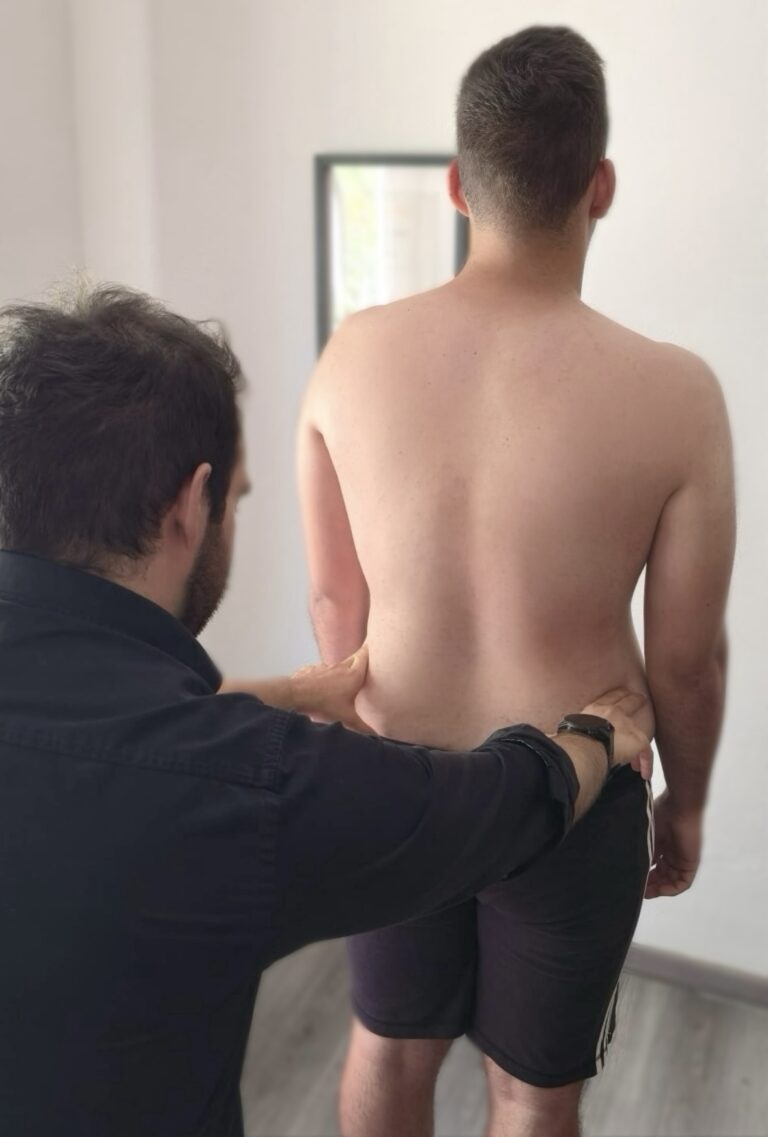
Visualization
It begins with observing posture and movement. How you stand, walk, or shift weight reveals patterns of imbalance that often explain where the problem originates — not just where it hurts.
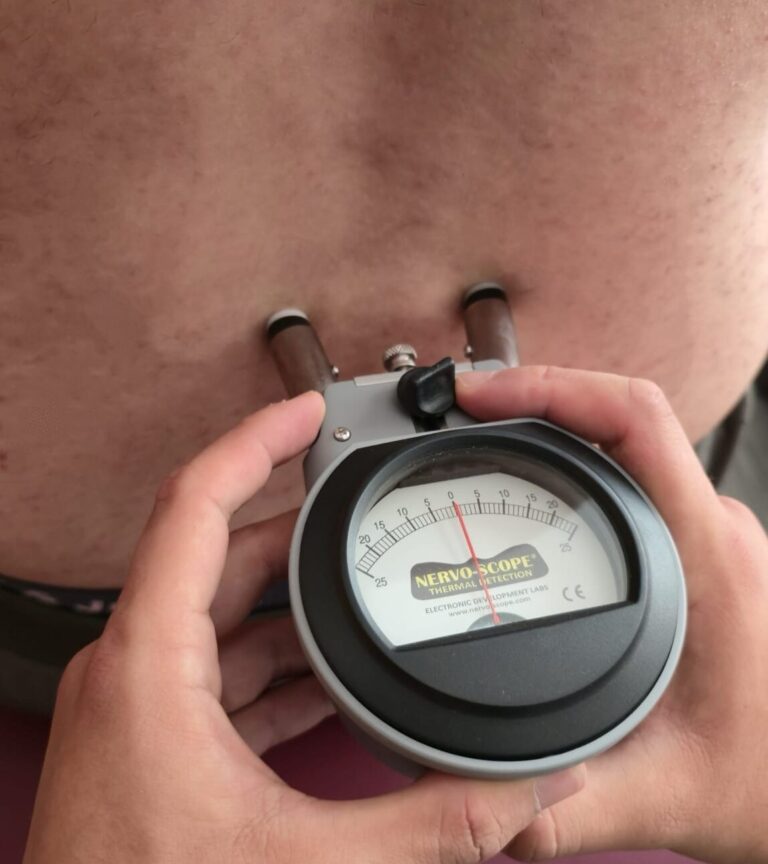
Instrumentation
A device called a Nervoscope, scans the spine to detect subtle heat variations. These temperature changes can indicate local inflammation or nerve irritation, narrowing down the area that needs closer examination.
Most practitioners don’t use this. It removes guesswork from an area of the spine that hands alone can’t fully read.
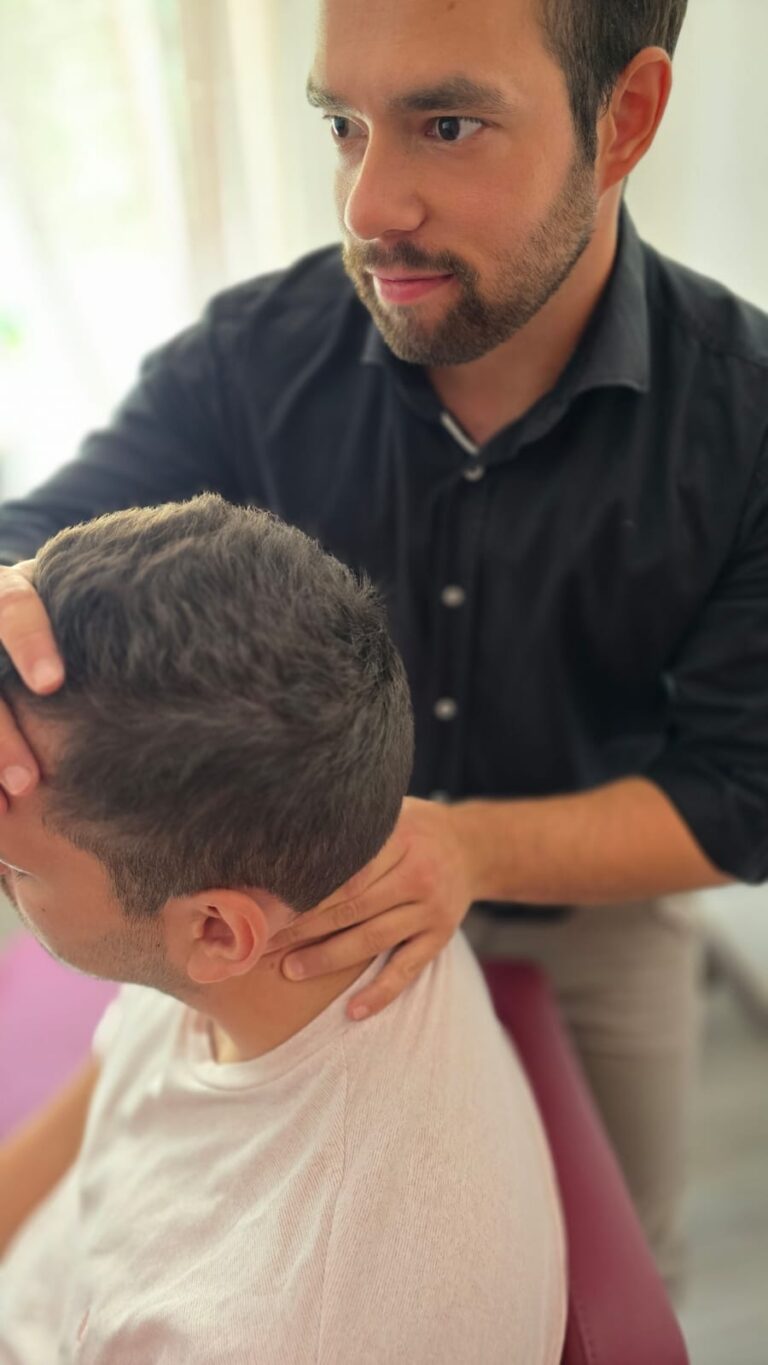
Static & Motion Palpation
During a detailed palpation we look for swelling, tenderness, and restricted movement, assessing how each segment behaves when you bend or rotate.
This reveals where normal motion is lost and how that loss affects the rest of the body.
This is where most cases start to reveal themselves. Not where the pain is — where the movement stops.
X-ray
X-rays do more than just reveal pathology. They help me determine exactly how and where to adjust. This includes:
- Identifying the precise contact point
- Knowing which side of the joint to stabilise and which to adjust
- Choosing the optimal line
The goal is not to simply “straighten” your spine, but to restore its natural function, while respecting what’s normal for your individual structure.
Most people have never had their spine analysed this way. They’ve had scans to rule things out. This is different — it’s analysis to find the exact point of correction
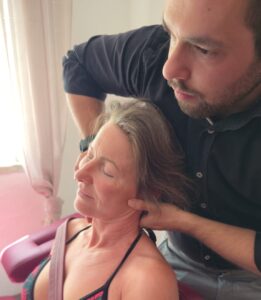
Case Management
Every step before this one is a piece of the puzzle. Visualisation shows where the body is compensating. The Nervoscope shows where the nervous system is reacting. Palpation shows where motion has been lost. X-ray shows exactly how and where the structure has shifted.
Case management is where all of it comes together. Not one finding in isolation — the complete picture. Only when every piece points to the same segment is an adjustment made. Precise, controlled, specific to you.
That’s what separates a Gonstead correction from a general adjustment. Anyone can treat the loudest signal. The work is in finding what’s causing it.